Showing posts with label Tales from the Archives. Show all posts

Friday, February 13, 2009

Unlucky For Some

Academic plagarism. It is on the increase. Mostly among students, many of whom go to university at least as much for the student lifestyle as the scholarship. If it is detected then the most severe penalty is expulsion. But what happens when the person who has done it is not a student but an academic? Professor Douglas Stibbs of Cardigan University knew the answer...

But the penalty was paid not by him but by Jacqueline Lake. A brilliant student, she submitted an essay on town planning for Professor Stibbs' Second Year module. Pushing a deadline and suffering from writer's block, Professor Stibbs put his own name to the essay, which was published in a prestigious journal.

A few months after the publication, Professor Stibbs answered his door to find Jacqueline standing there, her expression thunderous. She point-blank accused him of having stolen her work and threatened to report him to the University authorities. Although he told her that no-one would believe her, he still gave her a cheque for a thousand pounds and told her that there was more where that came from if she would write a couple of chapters for a book he was writing. More, that he would credit her as his co-author. She was suitably grateful, believing that this would make her reputation, ensuring her an academic post once she graduated. So the matter of the copied article was allowed to drop, and the student worked hard on the chapters she had been allocated. Stibbs told her not to let anyone know, in case other students objected, and the quiet, bookish girl agreed.

At last, the book was finished, and Stibbs took Jacqueline out for a quiet celebration. On the way back, he pulled the car into a drive in an isolated spot by the sea. He told her that he loved her, flattered her, and she offered him her lips.

He took them. And her life as well, throttling her to death and casting her lifeless corpse from the cliffs. When her body was recovered, it was too badly decomposed for the cause of death to be established. And when the book came out, it was in the name of Professor Stibbs alone.

The man's conscience gave him little trouble over the years. Occasionally, he thought that he saw Jacqueline Lake out of the corner of his eye. But these were isolated occasions. However, when the next round of assessments came up, he found the old block had returned. Asked time and again for an article or two, he had to put the dean off with excuses time after time.

Until, marking part two essays, he read one of such brilliance that he could scarcely believe it was written by a student. Yet it was, a new student, a transfer from another University. Martha Adare. In due course that, too, appeared in a learned journal. And, in due course also, he received a note from Miss Adare, accusing him of plagarism. She bluntly instructed him to come to the stairs off the old quadrangle and bring five thousand pounds in cash. Naturally he came, although not with the cash. He meant to buy her off in the same way he had bought off Jacqueline. And with the same ultimate pay-off.


He reached the little stairwell with pounding heart, wondering whether Miss Adare would fall for his blandishments. Or whether he might have to take more permanent steps there and then.

But the stairwell was empty. He waited, wondering what could have delayed the blackmailer. Until the lights went out.

"Professor Douglas Stibbs," a male voice delared. "Five years ago, you killed Jacqueline Lake, after you stole her work, to pass off as your own."

The professor began to speak, but the voice cut him off brutally.

"Do not try to deny what is true, for I know. Tonight, you came here meaning to kill another. With one difference. Martha Adare, as you call her, is not a student, but a Private Investigator. Tomorrow, the newspapers will publish the story that you passed off an essay written to order by an Oxford Professor as your own. Your career will be over."

When the lights went on, the Professor was alone once more. He hurried from the college buildings and leapt into his car. As he left the car park, he almost ran over a couple of students.

His body was fished out of the sea a week later. A full confession was in his abandoned car.

Thursday, September 20, 2007

No Escape

Joseph Stone was a musician. At least, he was a musician if he could be described as anything. Truth to tell, he had never really ceased to be a student, except that his university had thrown his out after three years in which he acquired nothing but vices. He always left without paying his bills, leaving landlords with enough bounced cheques to paper a room and former flatmates having to meet the bills that he had run up. One of them, a girl he had used then discarded, killed herself and her unborn child. Her parents tried to bring the man responsible for her death to justice. They could not. And he told the press that it was nothing to do with him, while moving into a new house under an assumed name. The reprobate tried to disappear.

He was woken one night by a hammering on the door. There he found his landlord with a guest. A figure in green, a scarf drawn across his face. With a grim smile the landlord told the man that he was wanted.

They found his body hanging from a tree in the Cathedral Close, Norwich. The same tree that his girlfriend hand hanged herself on.
And vengeance was satisfied.

Saturday, April 21, 2007

The Man Who Got Away with it

The door of long deserted Lloyd Park, near Cambridge. Just a little way away from the University city. And there, a little way away, lived Dr. Jewis-Jones, a retired Professor of Philosophy, once a guru to the students of the 1960s. Until, that is, his wife was murdered in 1972. It seemed to many that a part of the 'sixties died then. The Professor was put on trial, a decision denouced by a great many students, and exploited by the Professor to garner a large amount of publicity, all the more when he was found not guilty.

The Professor retired about ten years ago, and dropped out of sight. Imagine, therefore, the shock when he announced that he was going to be publishing a book describing just how he had got away with murder. The outcry was immense, but all the Professor did was laugh, mocking the press and 'the establishment.'

And maybe the establishment could be mocked, but justice is not mocked. Two days after the outbreak of the controversy, the Professor received a letter from the Green Man, promising that he would pay for his evil. The Professor could not contact the Police, without meeting with their mockery. His conscience kept him from them.

But as the day of the book launch approached, the Professor saw nothing. He began to despise the Green Man, mocking even him in the press. But the dawn of the day brought terror. Rising in the night, he heard a figure in his hime. Throwing on a coat and hat, the Professor ran to the door, only to find that someone had locked it and taken away the key. Picking up the 'phone, he prepared to call the Police.

The roar of the Green Man's gun roared, a bullet striking the man in his shoulder, turning him to face the implaccable masked figure.

The Green Man approached the Professor, shaking his head.

Only the Professor knows exactly what happened next. The press reported that, overcome by his conscienjce, he had fled. But the Green Man knows better. The Professor's body lies in a crypt under an ancient monastery church. Or rather props open a door.

You see, the Professor was still alive when he was placed in there.

Crime Does Not Pay.

Wednesday, November 29, 2006

Vengeance Villa

The blackened ruins of what was once a pleasing country house, now an eyesore in its overgrown park. This house's last owner, Mr. Stephen Thanet, was an art collector, who possessed a notable collection of antiques and Old Masters.

But Thanet, who was renowned in the local community as a philanthropist, had a secret. He had been a notorious drug-smuggler and blackmailer, under his real name, Joe Spengler. Living on his ill-gotten gains, he hoped to pass a quiet life, to forget about the people he had driven to self-destruction. Now he was famous throughout the neighbourhood for his parties.

The night of the 29th November, 1998 will live for ever in the memory of the locality. Stephen Thanet threw a party in honour of his daughter, who had become engaged to the son of a local land-owner. It was to be a night to remember. At the request of the girl, the party was a fancy-dress affair. There was no theme, so people came dressed in any sort of costume. Thanet was on top of the world. This was his finest hour.

As he withdrew into his study, the evil man found a figure in green waiting for him, a gun in his hand. The Green Man offered him a choice. He could either write a confession or a suicide note, the latter saying he was killing himself because he was ruined. His money would go to the families of those Thanet had ruined, either way.

His daughter found the body, and the suicide note. She insisted that the house be sold and, when it couldn't, left it to rot. His art collection was sold. And here's the rub. The proceeds of the sale went to charity.

You see, it was Miss Thanet who had informed the Green Man of the true identity of her father.

Friday, October 06, 2006

Paid in Full: Part Two

Robert Conyers stood outside the shaggy, moss-covered ruin that was Castle Green House, Cardigan, in the deserted space within the walls of Cardigan Castle. He trembled, wondering just exactly what was going on.

Before he could turn to go, a throaty laugh began to echo round the deserted walls. Conyers turned grey, his courage ebbing away.

"Robert Conyers," the voice declared. "Five years ago, you were responsible for the death of a man whose only crime was that he handled the account of a company that experimented on animals. He was killed because he had a slight connection to the death and suffering of animals.

"You have a direct connection to the deaths of two people. Other people paid for those crimes, while you were able to get away with murder."

"You can't..." the man trembled, starting towards the castle gate.

"I haven't." The Green Man replied grimly. "You judged yourself five years ago."

As the terrified man ran to the gate, something heavy made contact with the back of his head. Darkness claimed him.

The next day, the body of Robert Conyers was found hanging from a tree inside the overgrown castle grounds. The general verdict was suicide. 'Remorse at having caused the deat of two people' the Press speculated. But the Green Man knows differently.

Paid in full

Decaying Castle Green House, Cardigan, is now in the process of being rescued by the local community. Left to slide into dereliction for many years, the regency villa inside the castle walls has long been overgrown. The Green is an overgrown wilderness, while trees have become almost jungle-like in their growth. High up on one of the trees, sharp eyes can still detect a few strands of frayed rope, all that remains of the strange fate of Robert Conyers. An animal rights activist, Conyers planned an attack on an investment banker who handled the account of a major research laboratory. The attack left the man dead, while his wife committed suicide a few months later, after receving constant hate-mail.

Conyers forgot about the incident and he prospered. Five years later, the man, by now a successful film producer, was called to Cardigan Castle by a starley with whom he was having an affair, in a letter on paper headed, 'Castle Green House Hotel,' bearing an engraving of the house. He was able to book a room, calling a Ceredigion number. When he arrived, however, he found a deserted, shaggy ruin. Looking around, he felt a stab of fear...

Monday, October 02, 2006

A tale from the files of the Green Man


Ruperra Castle, once the palatial home of the heir of the Lorsdship of Tredegar, now a gutted shell. Jameson Craig, gutter journalist, received a call to this gaunt ruin some years ago. He had been promised a story that would ruin a prominent politican. Stopping outside the south gate, the journalist hurried up the pitted drive. He almost twisted his ankle on the rutted drive several times. At last, however, he made his way down, past derelict stables and servants' quarters, to the grey walls of the castle.

Lighting a cigarette, he waited for his anonymous source. At last, he heard the creak of a door in the deserted servants' quarters. Finding a door left open, he stepped inside, his feet tapping on the bare, rotting boards. And footprints in the dust of the floor. Jameson followed them earnestly, until he came to a brick wall. He turned pale, seeing that the footprints passed beneath the wall. Behind him, someone laughed, deep and threatening.

"Worried, Mr. Craig?" A deep, sinister voice echoed through the empty buildings. "I thought you were fearless in the cause of truth? Or is that only when you're safe in your office?"

"Look!" the quaking journalist shouted, "I don't know who you are, but I came here to meet a source!"

"That will ruin a good man, I know." The voice declared, relish creeping into it. "I am the Green Man, and I know far more than you can possibly know. It was I who had that girl call you, I who planted those rumours about the politician in circles where I knew you would hear of them. You and only you."

"But... but why...?" the journalist shook, his pudgy jowls wobbling.

"Thalia Jones," the Green Man declared solemnly. "A young actress who made a single mistake. One mistake, and you splashed it all over the papers. You caused her to despair. She shut herself in a garage and turned on her car engine. You won an award for that story and a salary increase. Yet, when that girl's distraught parents came to you, asking for a little money to give their only child a proper funeral, you laughed in their faces and told them she should be buried in a sack like any alley-cat."

"The girl had sex with a guy in the Hilton Hotel, London," the journalist shot back. "There was another girl involved. The guy was married."

"And so is the young woman you used and discarded two years ago." The voice silenced the journalist butally. "You destroy lives for a living," the Green Man declared, "and you destroy them for your recreation. You will not do so again."

"You can't kill me!" the journalist yelled, "you..." As he turned to the door, it slammed shut.

"And now," the Green Man laughed. "You will meet your reward."

The journalist watched, horrified, as white smoke began to seep through the floor. He tasted the bitter taste of exhaust fumes.

"Yes," the Green Man laughed. "Exhaust fumes. You will die as Thalia Jones died. And your body will never be found..."

An archaeological dig did find the remains of the corrupt journalist. They are today exhibited in a museum as those of a ninth century monk.

There is no escape from the vengeance of the Green Man.

Tuesday, August 29, 2006

From the Archives: Why the Green Man?

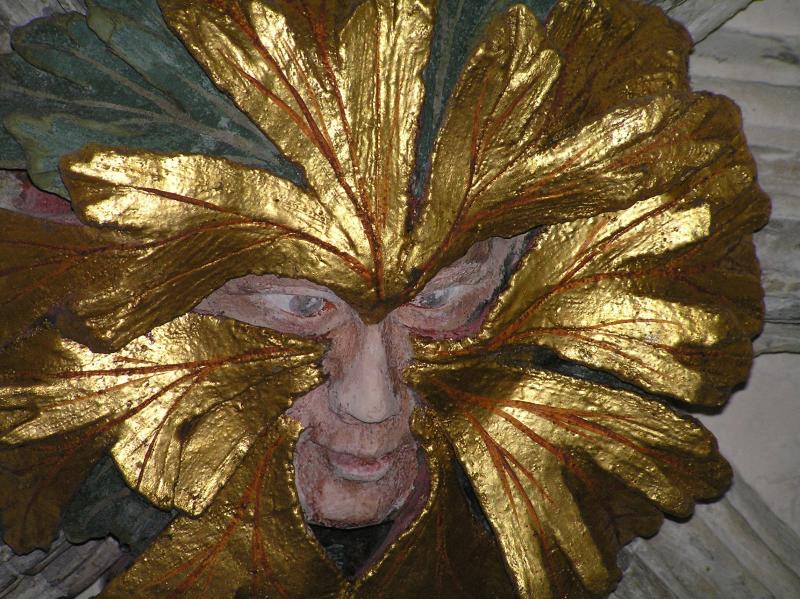
Before he was the Green Man, the Green Man, then an international playboy, was good friends with a crusading anti-mob attorney. On holiday in England, the 'plane they were flying was destroyed by a bomb planted by the mob. The attorney and his wife were killed, together with the girl the Green Man was with. The only survivor, the Green Man stumbled into a church, passing out in the porch. As darkness claimed him, he saw a carving of the green man, an ancient symbol of rebirth. In that instant, the Green Man was born...

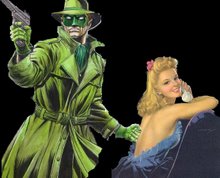
The Green Man wears a dark green trenchcoat, green hat, mask, scarf and boots in tribute to his namesake, the Green Man.

Friday, August 18, 2006

Seven: Vengeance Falls

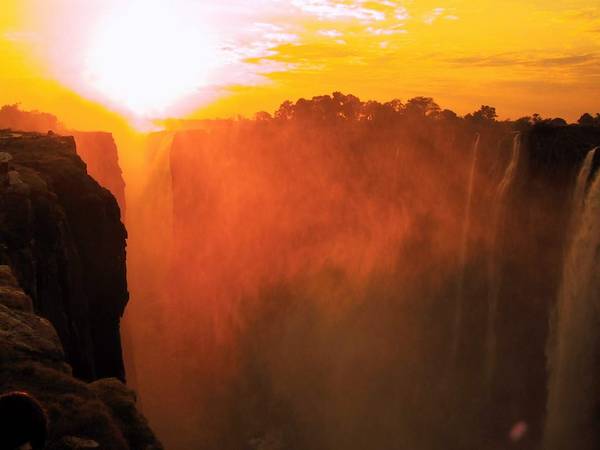
Victoria Falls, in the heart of Africa. The longest waterfall in the world. As you get off the train, you can hear a sound loud as thunder, see what seems to be a huge plume of smoke rising over the jungle, just outside the town.

There are two hotels, just past the station, one a Las Vegas-style horror version of Great Zimbabwe. Appropriately this hotel contains a Casino. However, the doorman is dressed as an Ndebele warrior (inappropriate as the Ndebele, refugee Zulus who were running from King Shaka because they'd kept a herd of cows, looted and burned Great Zimbabwe almost as soon as they arrived in the Zambezi valley.

The other Hotel, the Victoria Falls Hotel, is an old-fashioned Victorian establishment, and the service was impeccable back in 1998. Sadly, with the clamp-down on foreign travel, the office of the Green Man now has to make do with a hotel in Livingstone, the Zambian side of the Falls.

Arthur Salesbury, mercenary, was staying at the Victoria Falls hotel in 1998, resting after his massacre of 1,000 men, women and children in the Democratic Republic of Congo. This news reached the ever-alert ears of the Green Man.

At the hotel, Salesbury met a charming young redhead. She resisted his crude attempts at seduction, and soon he found himself falling truly in love, for the first time in his life. They took long walks by the Falls. She, in shorts and tee-shirt, stood and let him snap her in front of the Falls. She laughed with him, dined with him, kissed him, but when he suggested going further cut him off with a lively giggle. Fascinated, he continued his pursuit of her, even agreeing to leave his pistol in his room when they went for their long walks, as she said it dug into her when they cuddled.

One day, they drove to a lonely spot by the Zambezi, upstream from the Falls. There, after a long walk from the car, the Green Man overpowered Salesbury, helped by the redhead. He begged her to help, to consider his love for her. She laughed in his face and told him that he had not heeded the cries and begging of innocents. Salesbury was bound, and flung into the river. A good swimmer, he tried to make it to the other side, despite his bonds. He was, he thought, too far upstream to go over the Falls.

And he was right. But that far upstream, the crocodiles can also survive. The Green Man and the redhead watched while the crocodiles acted as mute agents of vengeance.

They found his arm a month later. The rest of him has never been recovered.

Thursday, August 17, 2006

Five: The Graveyard

This is St. Michael & All Angels' Church. Today the church is a ruin, overgrown. According to the records of the Church of England, the graveyard is disused.

Seven men have been buried here in the last decade. None by clergymen. Every one by the associates of the Green Man.

The Green Man does not give up. If you are under the vengeance of the Green Man, here is the message:

'I'll dog your every move, I'll follow you into your grave if I have to, I'll write my name on your tombstone.'

Four: The Green Man's Agents of Vengeance

Even a lone figure, lurking in the shadows cannot accomplish all vengeance. And the Green Man is always on the look-out for those who can deal death and pain to the wicked.

The Green man is ably assisted by a secretarial staff of two, Ms. Vivienne L. Madison, who does the Green Man's mysterious business out of hotel rooms the world over, and a redhead who can burgle any place on earth.

In all but the most extreme emergencies, the Green Man, and only the Green Man will deal out vengeance. But, if needs be, one of the Green Man's agents of vengeance will destroy the evildoer, before reporting back to the ever-shifting office of the Green Man.

The Green Man will make his presence known.

Two: Pain in Panama

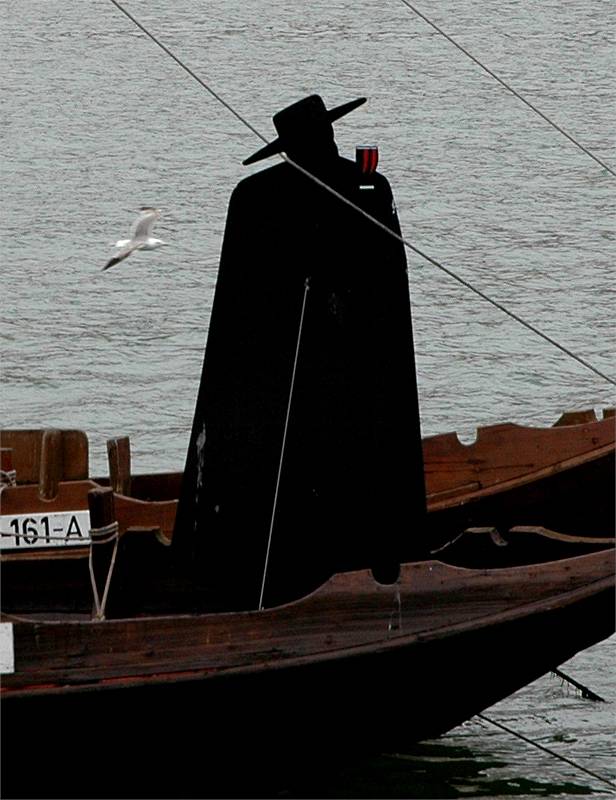
The agents of an infamous drug-Lord posing as an internet atheist were taced to Panama. This picture, taken moments before their ship exploded is thought to be of the Green Man enjoying a celebratory tipple.

The drugs shipment burned with the ship, before both slid to the bottom of the ocean.

One man was found later, horribly beaten.

You cannot escape the vengeance of the Green Man.

Wednesday, August 16, 2006

One: Lowell House

These ivy-clad ruins are Lowell House, Denbighshire, Wales. A man called Cledwyn used to live here. He owned several houses in Welsh towns. One of those houses, in Cardiff, was used as a brothel. With his knowledge. One night, it burned down. The place was a fire-trap. Four girls died, and three more were terribly burned.

Mr. Cledwyn denied all knowledge, saying he thought the house was deserted, awaiting repair. The Green Man got into the Estate Office of Cledwyn Properties and discovered the truth.

Three weeks later, Mr. Cledwyn's bodyguard wandered into Ruabon, burns to eighty percent of his body. He lived on for another month somehow, then died. Investigating, the North Wales Police searched Lowell House. They found Mr. Cledwyn there. What was left of him. Someone had tied him to the spit in the Great Kitchen and roasted him. Alive.

Evildoers cannot escape the vengeance of the Green Man.